PRIMA Retinal Implant for Geographic Atrophy & Dry AMD
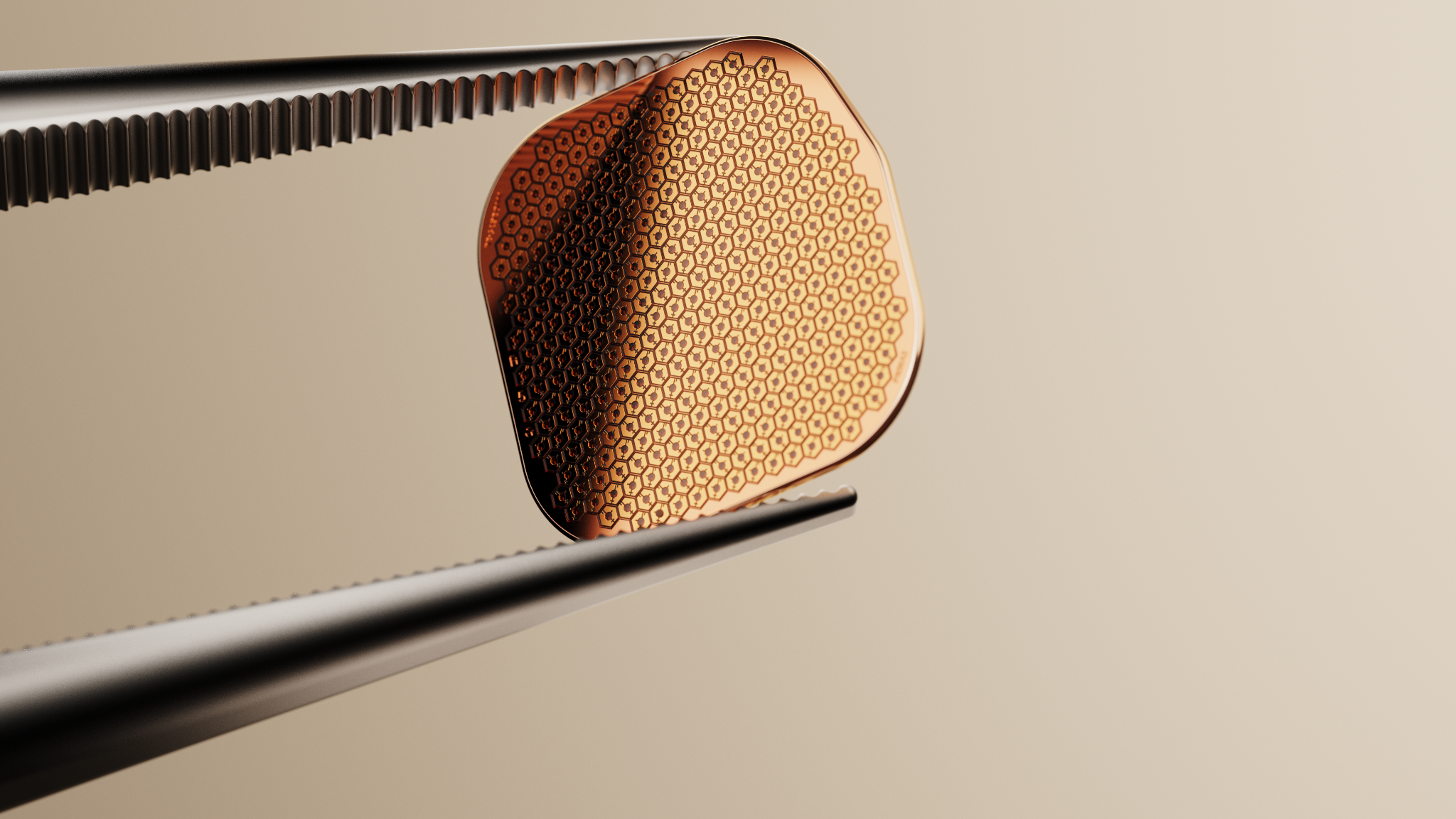
PRIMA is a micro-electronic subretinal implant technology that is designed to restore the central vision function in those living with severe vision loss due to age related macular degeneration (AMD).
This technology was developed by the Science Corporation (USA) and is a breakthrough in artificial vision and bioelectronic medicine. It has been engineered to address Geographic Atrophy (GA) in patients with late and irreversible dry AMD.
Patients who have lost their central vision due to Geographic Atrophy find that daily tasks, such as reading a letter or recognising a face is impossible. PRIMA provides an opportunity to restore vision in the central field, while preserving natural peripheral vision.
Mr Mahi Muqit will initially be the primary international centre offering PRIMA Vision Restoration Service, running in collaboration with Science Corporation USA. Mr Muqit played the role of principal investigator, leading the UK team for the international clinical trials.
What is a Retinal Implant?
In a healthy eye, millions of light-sensitive cells (photoreceptor cells) in the retina capture incoming light, converting it into electrical signals. These signals travel through the optic nerve to the brain, where they are interpreted as images.
With Geographic Atrophy, these specialised cells start dying off in the central part of the retina (the macular), causing dark spots or blind zones in the central vision. The deeper layers of the nerve cells that sit behind the destroyed cells are often functional and alive.
Retinal implants are miniature electronic chips that are played beneath the retina, acting as an artificial replacement for lost photoreceptor cells. The implant receives light patterns, converting them into electrical impulses that stimulate the surviving nerve cells, helping to re-establish a pathway for the information to reach the brain.
Understanding Geographic Atrophy and Dry AMD
Age-Related Macular Degeneration (AMD) is one of the leading causes for severe sight loss, occurring in two main forms:
- Wet AMD – abnormal and leaking blood vessels under the retina, often treated with anti-VEGF injections
- Dry AMD / Geographic Atrophy (GA) – A progressive condition where the retinal cells waste away over a period of time.
As GA advances into the central point of the macula, the central vision is destroyed. Traditional treatments for Dry AMD focus on slowing lesion growth, PRIMA is the only approved device that is designed to actively restore lost central vision.
To book an appointment call +44 7717 203564 or email pp@retinasurgeon.uk.com
How Does the PRIMA System Work?

Subretinal Implant
An ultra-thin photovoltaic chip, measuring half the width of a human hair, containing light-sensitive pixels is surgically positioned under the macular in the area of atrophy.
PRIMA Glasses
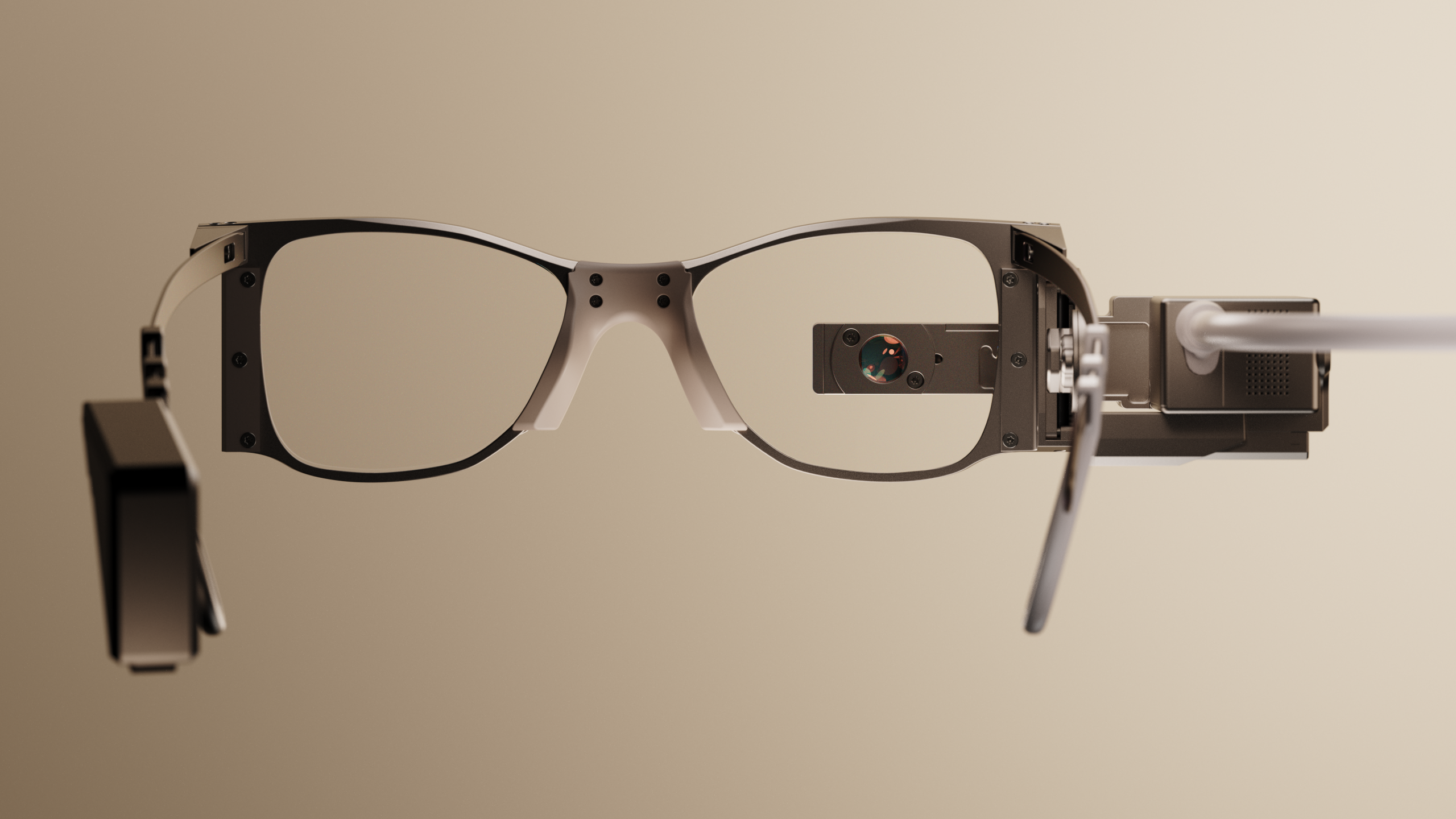
Modern and lightweight glasses equipped with a miniature front facing video camera, along with an eye-facing near-infrared light projector.
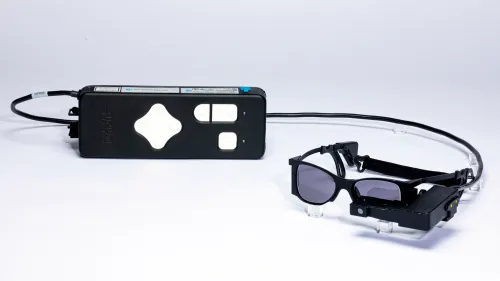
Pocket Processor
This is a small waistband-mounted computer that uses artificial intelligence algorithms, processing visual images captured by the camera in real time.

Step-by-Step Functionality
- Capture – the camera on the glasses captures the scene in front of the patient
- Process – the pocket computer then processes the image, sending a digital signal command to the PRIMA glasses
- Project – an integrated projector in the glasses shines an invisible near-infrared light beam through the pupil onto the photovoltaic implant
- Stimulate – the implant, acting like a tiny solar panel, converts the near-infrared light into micro-electrical pulses, stimulating the surrounding bipolar nerve cells
- Perceive – the nerve impulses then travel down the optic nerve to the brain, enabling the patient to perceive artificial central vision patterns, superimposed over their natural peripheral vision
- Digital Zoom – patients can use the magnification controls on the processor to zoom in on small text or objects, expanding their ability to read small fonts
Clinical Research and Evidence
The safety and effectiveness of the PRIMA system has been evaluated in rigorous multi-centre clinical studies, including the PRIMAvera Pivotal Study, which was published in the prestigious New England Journal of Medicine (NEJM).
Key Clinical Findings:
- 80% of participants achieved meaningful improvement in visual acuity. https://primasicht.de/en/healthcare-professionals/
- Patients showed an average improvement of more than five lines on a standardised eye chart with maximum improvements recorded up to fifty nine letters. https://science.xyz/news/new-england-journal-of-medicine-prima/
- 84% of participants reported being able to use the device at home to read words, letters, and numbers. https://andreacusumano.com/wp-content/uploads/2025/10/NEJMoa2501396.pdf
- Natural peripheral vision was unaffected and preserved alongside the restored central vision. https://primasicht.de/en/healthcare-professionals/
- The surgical implant profile was consistent with standard vitreoretinal procedures with most of the early postoperative side effects resolving within a two month period. https://primasicht.de/en/healthcare-professionals/
It is important to note that PRIMA is not a cure for underlying macular degeneration or a restorative procedure for natural 20/20 eye function. It does provide functional central vision, requiring dedicated post-operative rehabilitation and training in order to interpret it effectively.
Who May Be Suitable for PRIMA?
Eligibility for PRIMA relies on careful clinical evaluation by a specialist vitreoretinal surgeon. PRIMA does offer new hope, yet it’s important to understand that it is not suited for all forms of vision loss or every stage of age-related macular degeneration.
General Candidate Guidelines:
- Diagnosis – adult patients with severe central visual impairment caused by advanced Geographic Atrophy with foveal (sharp central vision) involvement
- Retina Condition – the retina is examined to ensure it has sufficient integrity in the inner layers and the optic nerve
- Atrophy Area – must meet specific dimensional criteria, ensuring it is suitable for subretinal placement
- Rehabilitation – patients must have high motivation to complete a structured vision rehabilitation programme that lasts for several months after the surgery.
Exclusion Factors:
PRIMA may not be suitable for patients who have significant active ocular infections, advanced glaucoma, severe corneal opacity, or other ocular conditions that may impair surgery, light transmission, or nerve conduction.
How to Enquire About a PRIMA Assessment
If you or your love one are living with severe sight loss caused by Geographic Atrophy / Dry AMD, the first step is to have a comprehensive diagnostic evaluation with Mr Mahi Muqit.
1. Initial Clinical Consultation
The first step is to have a thorough assessment of your retina structure using advanced Optical Coherence Tornography (OCT), along with microperimetry, confirming whether your eye meets the requirements for PRIMA.
2. Assessment & Guidance
During your consultation you can have a discussion with Mr Muqit on your expectations, the realistic outcomes, surgical journey, and rehabilitation timeline.
Enquire About PRIMA Today
Contact Mr Mahi Muqit today to book an assessment or find out more about PRIMA. Call +44 7717 203564, send an email to pp@retinasurgeon.uk.com, or complete the contact form https://www.retinasurgeon.uk.com/make-appointment/ without delay.
Insurance Partners


Accreditations